Rye for Rewards
A full redemption experience — catalog, checkout, points, tracking, returns — built as native React components and powered by Rye's Universal Checkout API and Product Data API.

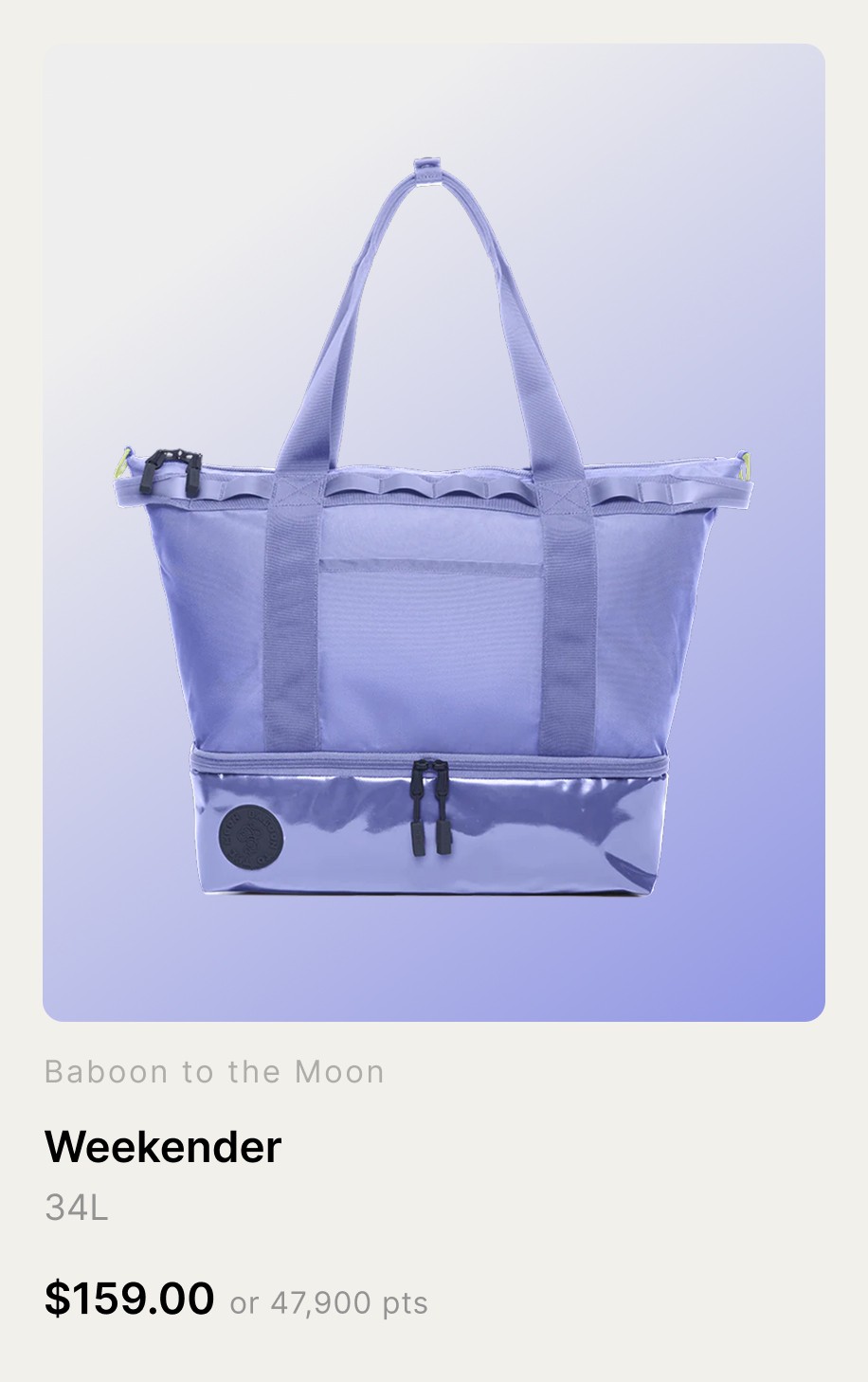
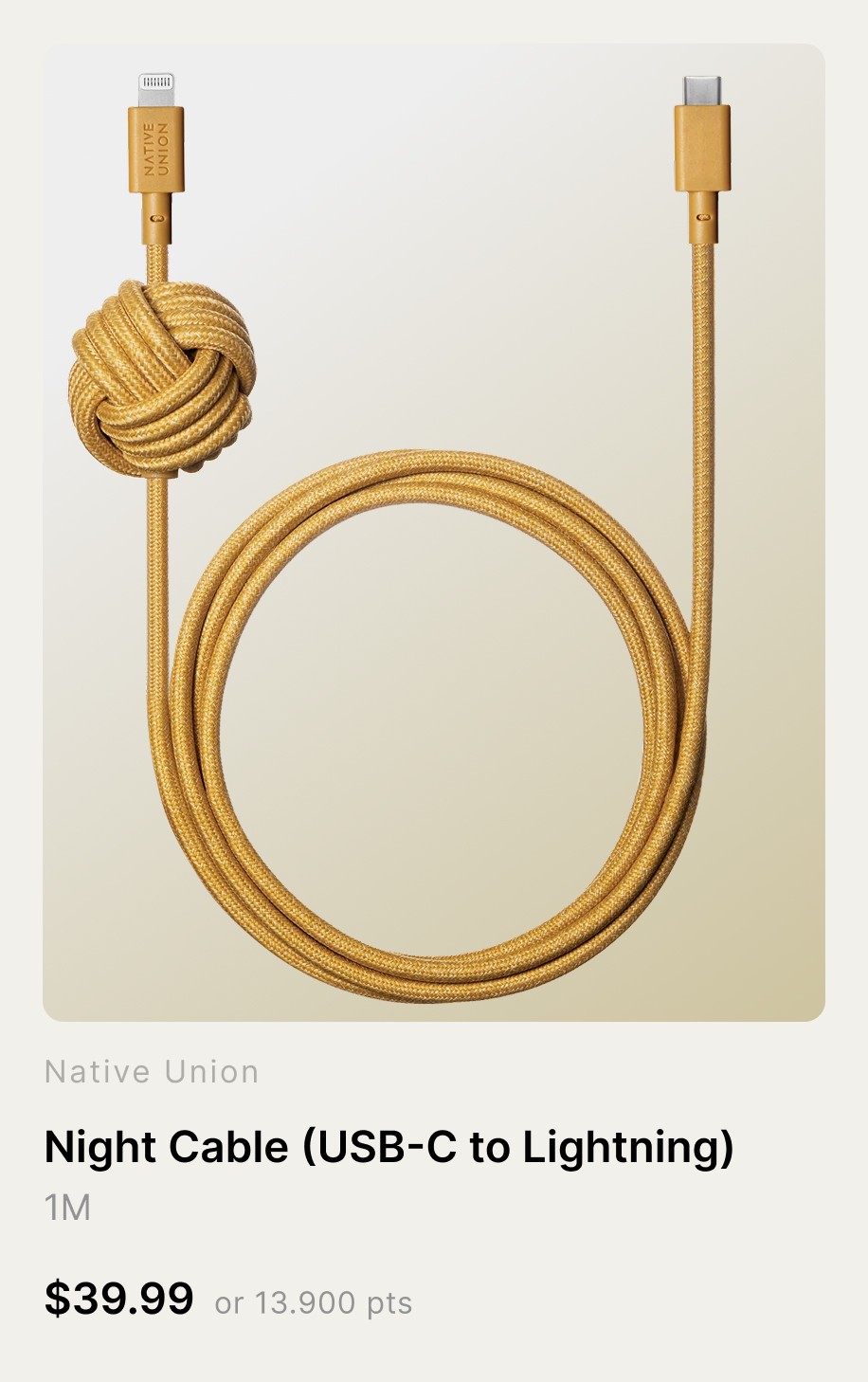
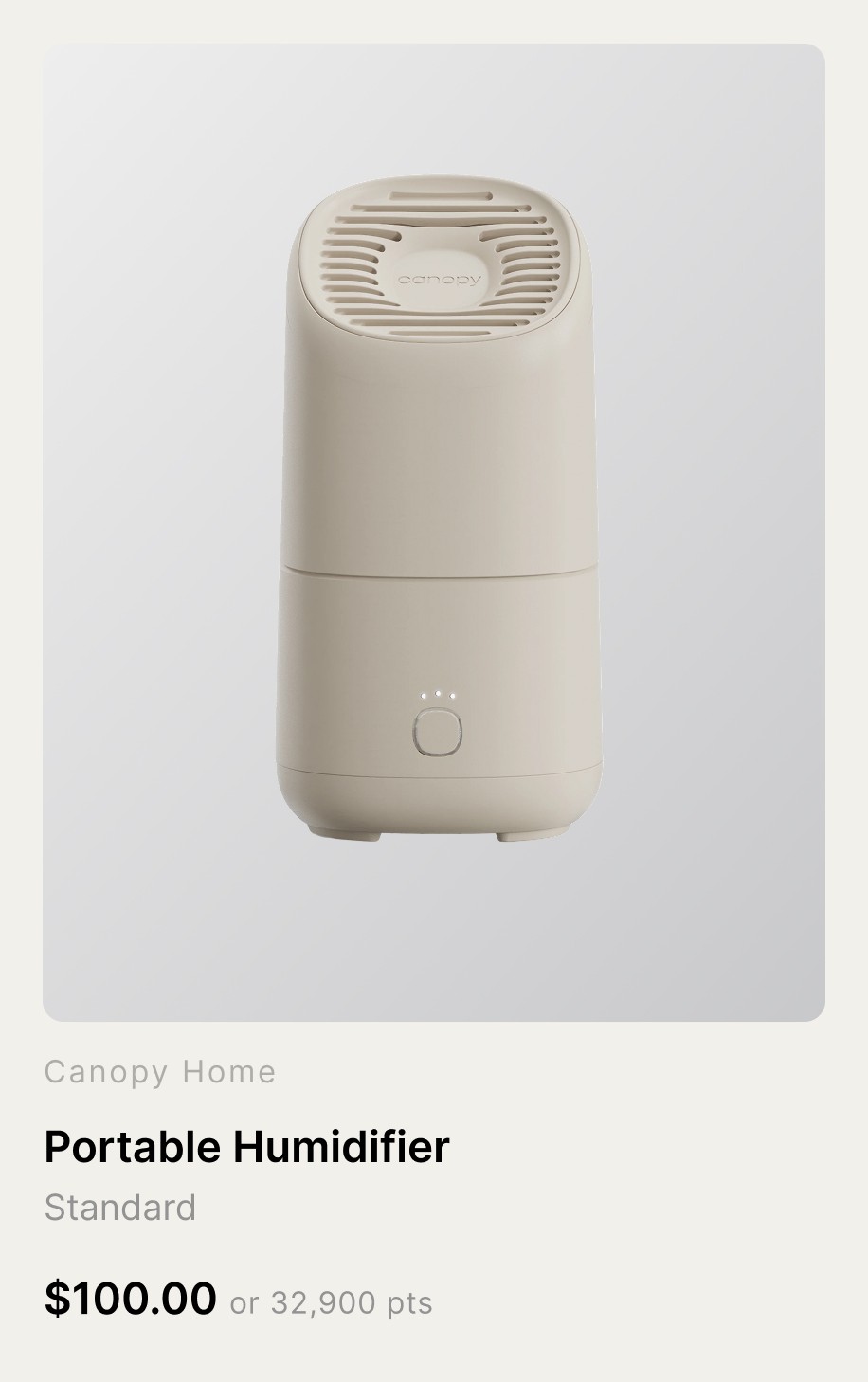
Every rewards program
is now a commerce product.
Running a rewards platform means
running a commerce company.
To ship redemption today, you build (or stitch together) all of this yourself:
Merchant relationships
Negotiate, onboard, and maintain catalog access with every brand you want to offer.
Commissions and reconciliation
Track affiliate commissions, payouts, and the rev share that fuels your points economics.
A native UI you don't have
Build catalog, PDP, payment sheet, points balance, order tracking, and returns from scratch.
Affiliate-network dependency
Bolt on networks for inventory and let the partner own the user — a UX you don't control.
Every quarter you spend on plumbing is a quarter you're not spending on your points economy.

Affiliate links send your user away.
Affiliate networks are built for one job: route traffic to a merchant's checkout and split the commission. For a rewards program, that means your user clicks redeem and lands on a third-party site. The merchant owns the checkout, the support, and the customer relationship from that point forward.
Custom integrations close the gap, but only for the brands you can afford to integrate with directly. Both paths leave you with a portal that feels like a portal.
WITHOUT RYE
Status Quo
Bolt on affiliate networks
for inventory.
Build catalog, PDP, payment, tracking, returns
all from scratch.
Hosted iframes
or off-site redirects.
Per-brand
merchant onboarding.
Manual reconciliation
across networks.
WITH RYE
Rye for Rewards
One API for 1M+ products
across thousands of merchants.
Six native components
copied into your repo.
Source-available components
your brand front to back.
New brands
available the moment they're in the catalog.
One account
one ledger, one reconciliation.
Rye made commerce composable.
Product Data API
Real-time structured product data from any URL.
Universal Checkout API
Product URL in. Confirmed order out.
Rye for Rewards
Native components for redemption.
Your brand. Your user.
Rye operates the two pieces of infrastructure every rewards program needs: real-time product data from any URL, and a single checkout API that places confirmed orders without merchant integrations.
Rye for Rewards is what happens when those primitives meet a native component library — a redemption experience your team owns, on top of commerce Rye operates.
A full redemption flow,
dropped into your app.
Rye for Rewards is a source-available React component library — catalog, product details, payment sheet, points, order tracking, and returns. Install with one CLI command and the source lives in your repo.
Components are pure presentation. Your backend wires every meaningful interaction through callbacks, so you stay the merchant of record, you keep the user relationship, and the frontend never sees a Rye API key. The same component surface handles the three patterns every rewards program runs: points-as-tender, cash plus points, and discount passthrough.
Six components.
One coherent redemption flow.
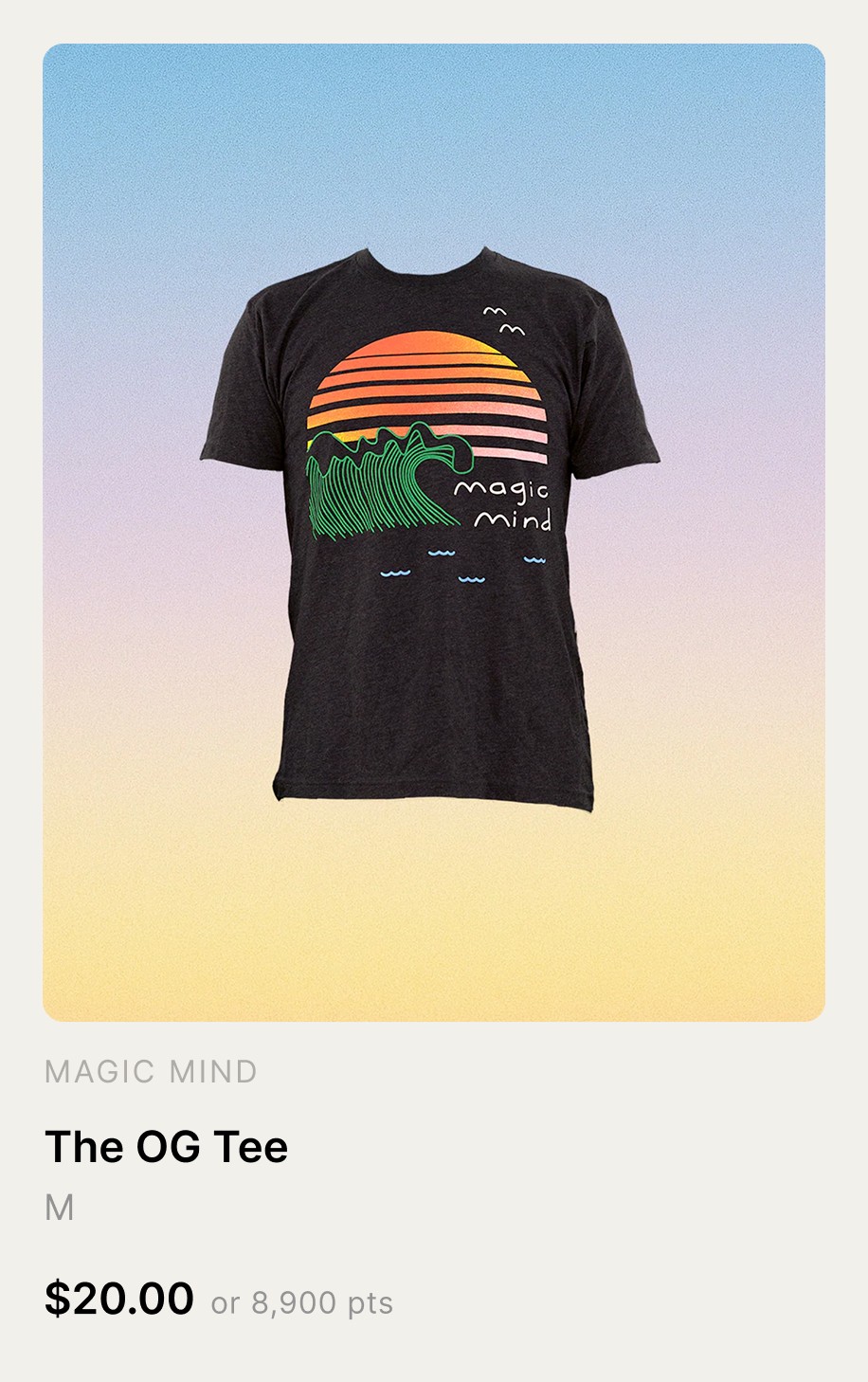
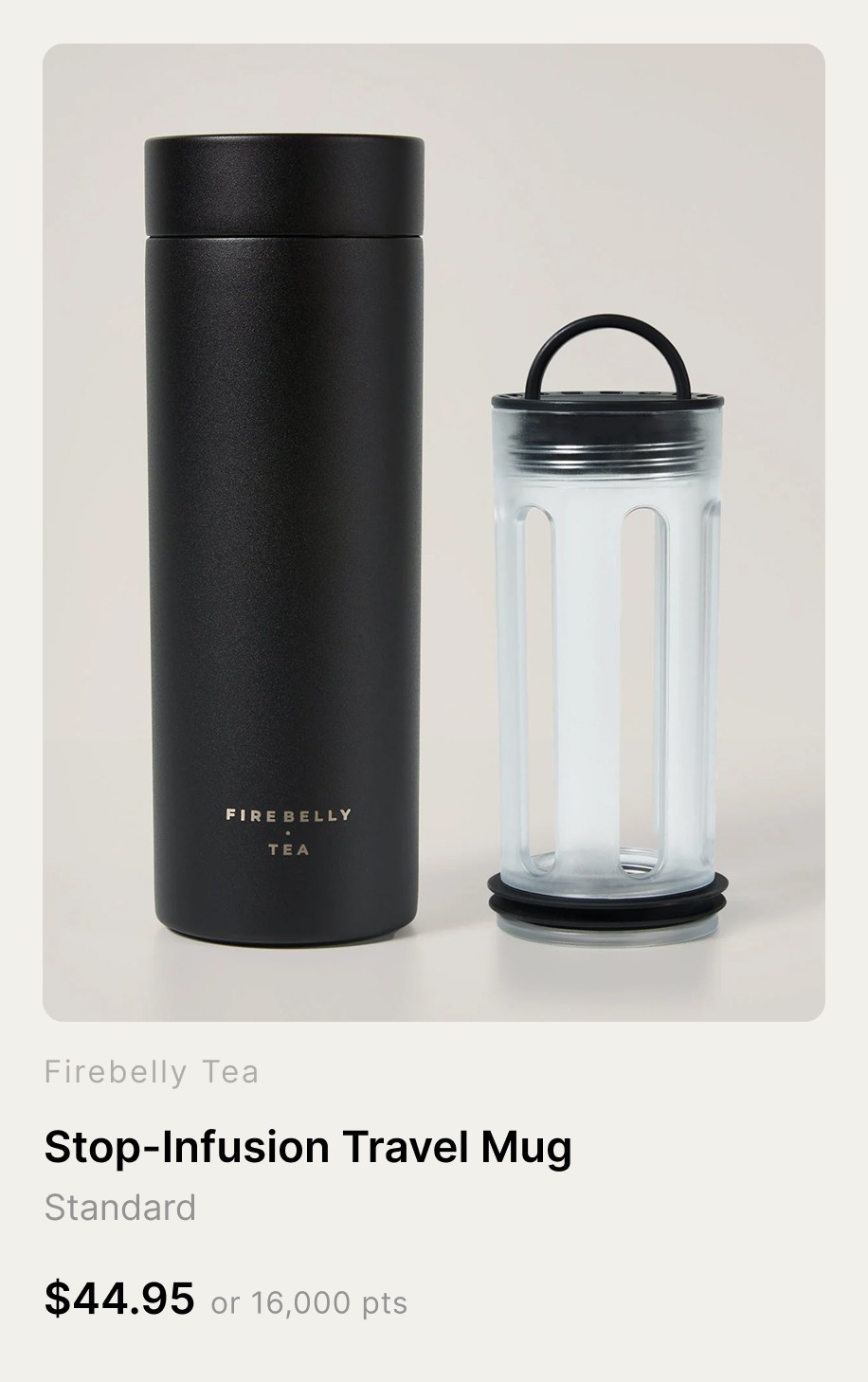
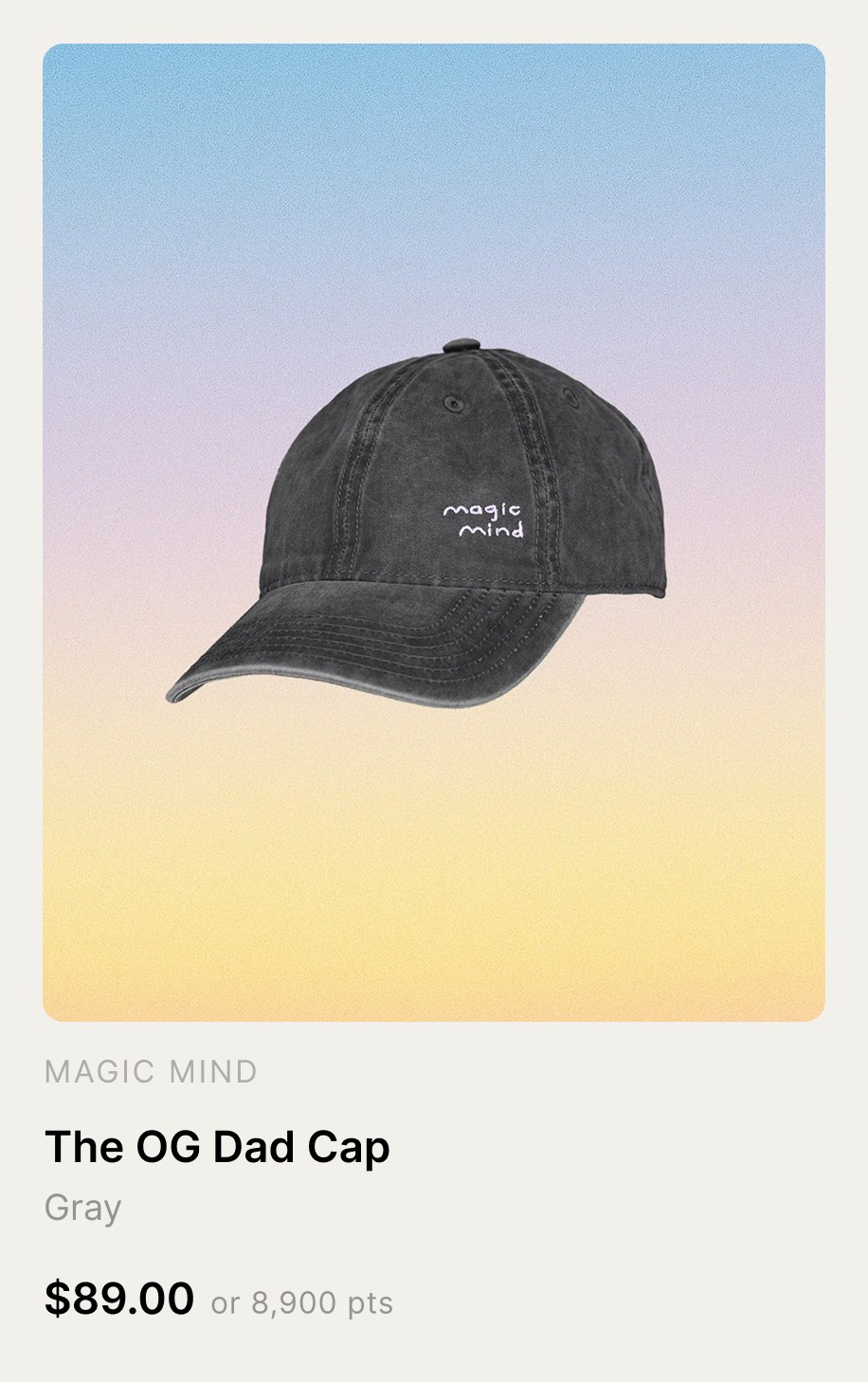
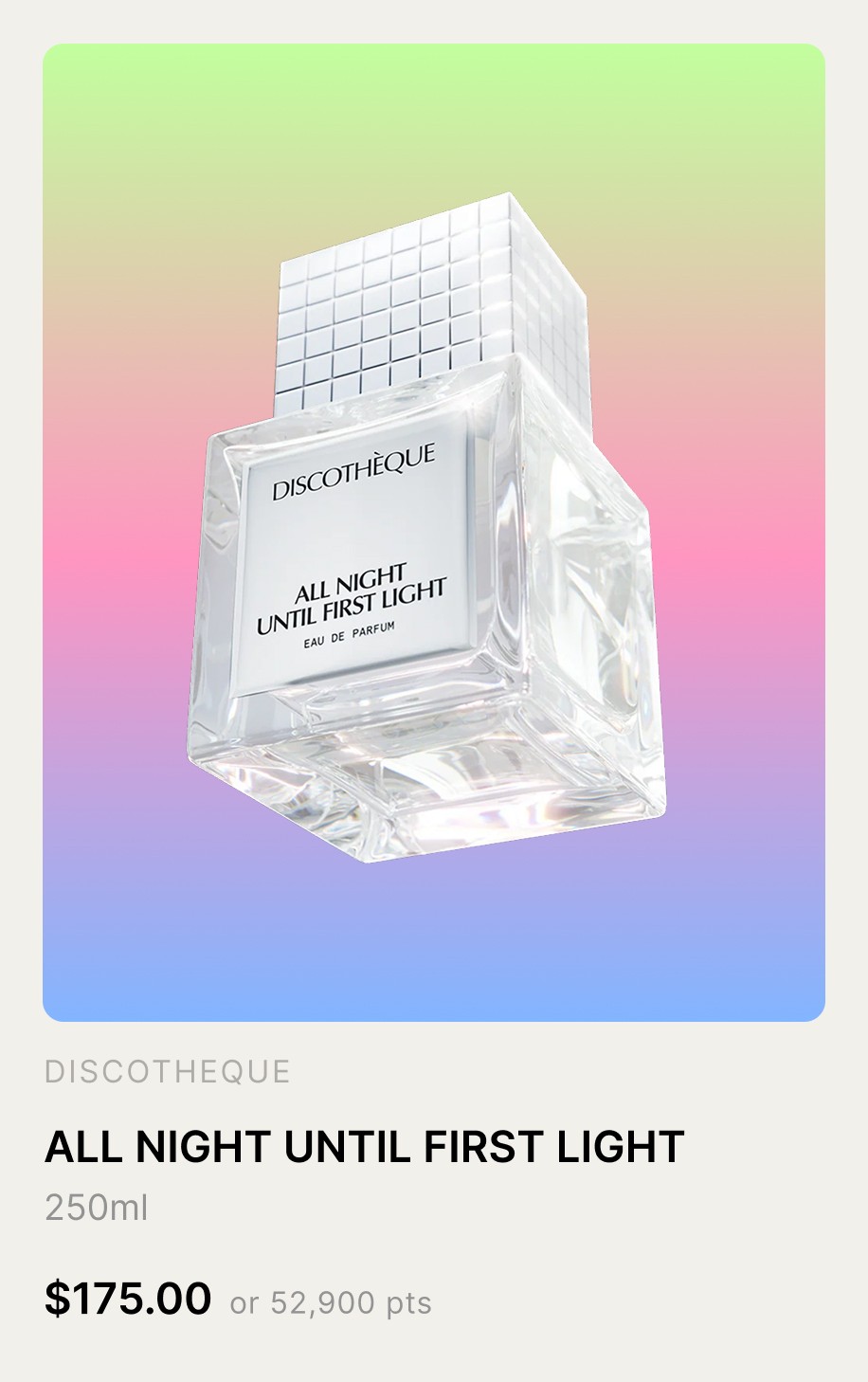
Product Card
A catalog tile that handles the messy realities of live commerce — out-of-stock SKUs, subscription-only products, marketplace outages, broken thumbnails.
default, hover, selected, non-buyable, loading skeleton, image-failed.
Product Details
Editorial PDP with variant selectors that revalidate on confirm — so a stale variant never gets to checkout.
ready, loading, configurator (Build Your Own with $0 variant slots), variant-revalidation surface.
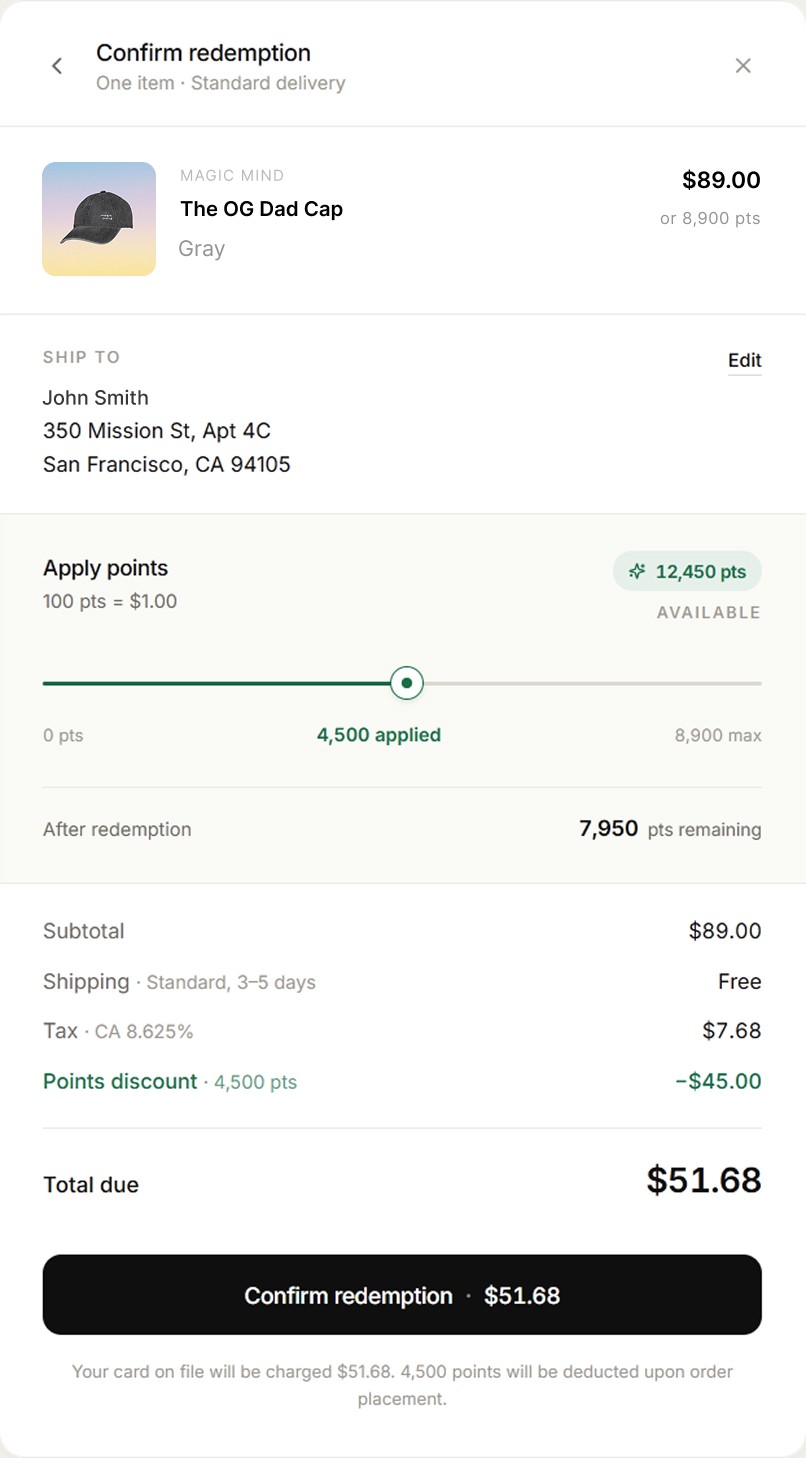
Payment Sheet
Order summary, shipping address, and confirm — with transparent cost breakdowns for duty and the subtotal-tax-shipping discrepancies real commerce throws at you.
loading, ready, mixed-tender preview, cash-only, full-points, errors. Optional Stripe Elements adapter.
Pay with Points
A balance pill and redemption slider that previews "after redemption you'll have X points left." Composes inside the Payment Sheet.
full-points, mixed-tender, insufficient balance.
Order Tracking
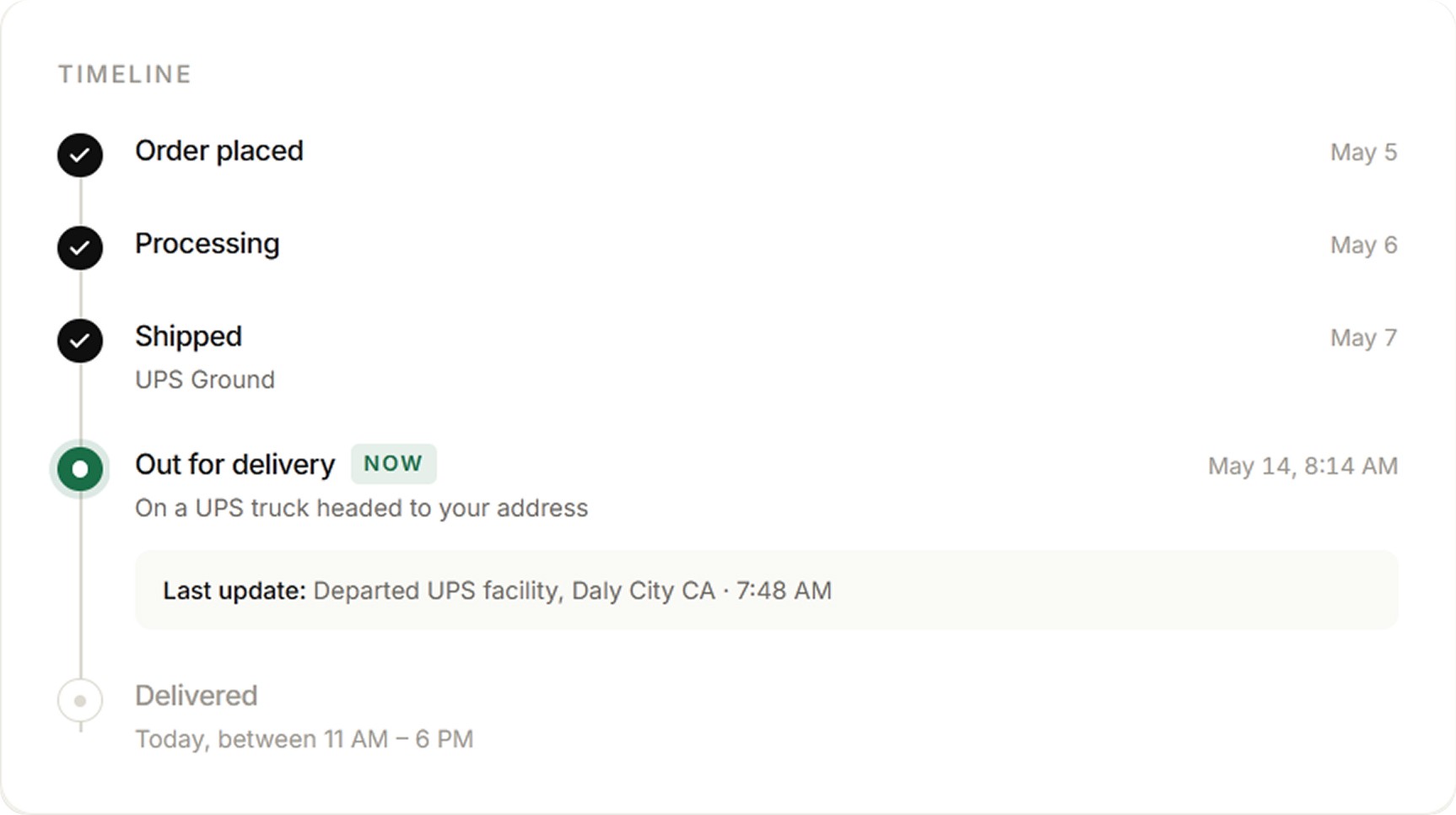
A tracking timeline that explains itself — including the states most rewards portals pretend don't exist.
placed, processing, shipped, out-for-delivery, delivered, cancelled, refunded, stuck-under-investigation. Explicit cancellation CTA. Clear "who to contact" routing per status.
Returns Center
Return-request form, multi item selector, refund status.
COMING SOON
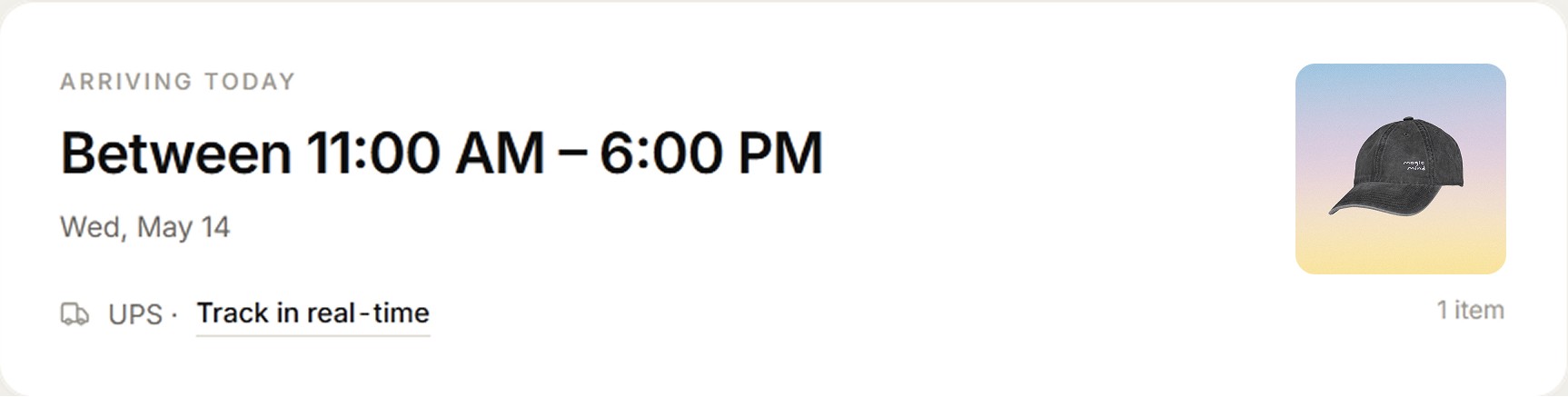
Your backend authenticates the user, debits points, and calls Rye's checkout API. Rye fulfills the order against your account. The frontend never sees a Rye API key — the components emit callbacks; your server does the rest. Your transactional emails go from your domain. Your support sees your branding. Rye is invisible to the end user by design.
01
User
Rewards app
02
Your backend
auth, points ledger
03
Rye API
Universal Checkout API + Product Data API
04
Merchant
Fulfillment
Powering top Rewards
and Loyalty platforms.
We've partnered with leading programs to power their rewards catalog where users can spend points and cash on a monthly-refreshed curated catalog of products.





Quick-start protocol
Get an API key.
Sign in and create a project key in the Rye dashboard.
Install the components.
Run the install command with the components you need. The CLI copies the source into your repo:
pnpm dlx shadcn@latest add \
@rye-api/product-card \
@rye-api/payment-sheet \
@rye-api/order-tracking
Wire callbacks to your backend.
Authenticate users, debit points, call Rye's checkout.
Source-available components live in your repo from here.
Private beta
REACT 19 // TYPESCRIPT // VUE / SVELTE // NATIVE PORTS PORTABLE VIA THE SOURCE